Can you tell us a little bit about yourself?
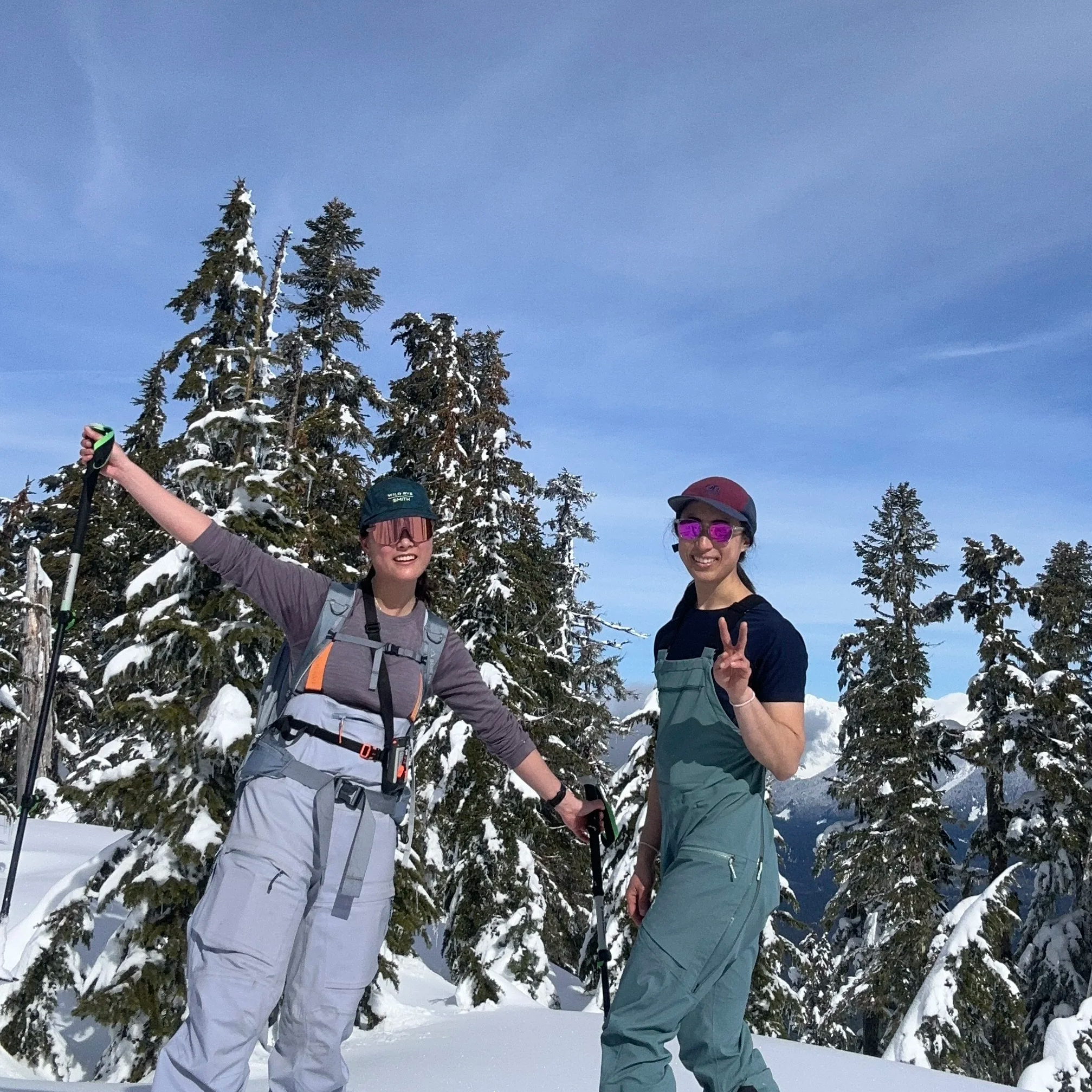
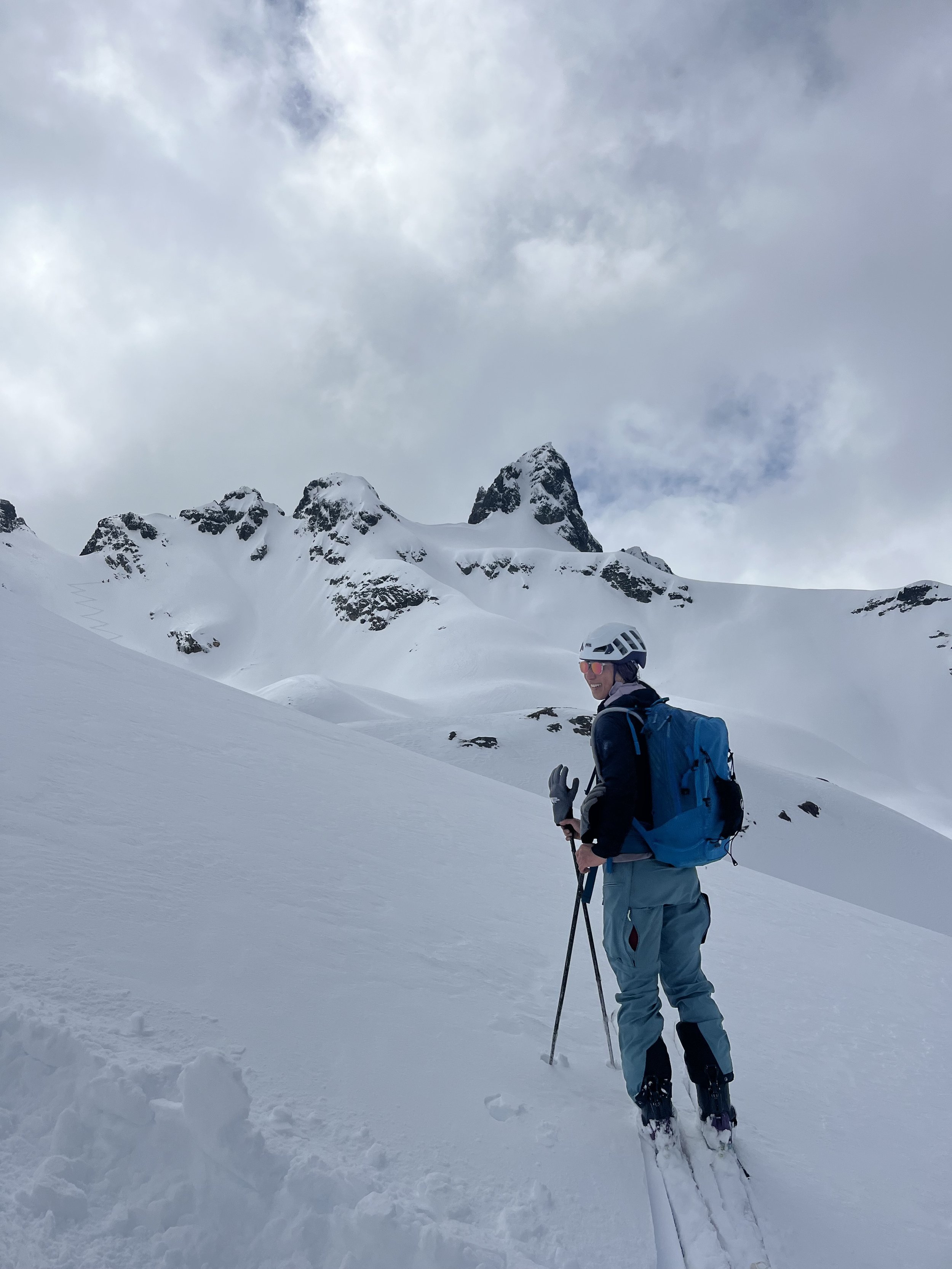
My name is Kelly and I've been graced with wonderful mentees for a summer 2025 climbing season and most recently the winter 2026 backcountry skiing season. I grew up in Ontario and moved to the Lower Mainland just before COVID, and currently live in Burnaby.
Like many other Ontario transplants, I was enamored with various outdoor pursuits after moving closer to the mountains. I am thankful for every recreational adventure I have and I'm excited to share these experiences with those around me.
One of my passions is uplifting the BIPOC community. I don't "fit in" with the common mountain outdoors archetype (white, mountain/outdoor experiences from a young age, typically male, belonging in a specific socioeconomic class) and it can be a very unwelcoming space for myself and those that also similarly don't fit in. Volunteering with Mountain Mentors is one way I personally feel I can contribute to breaking down barriers for the under-represented.
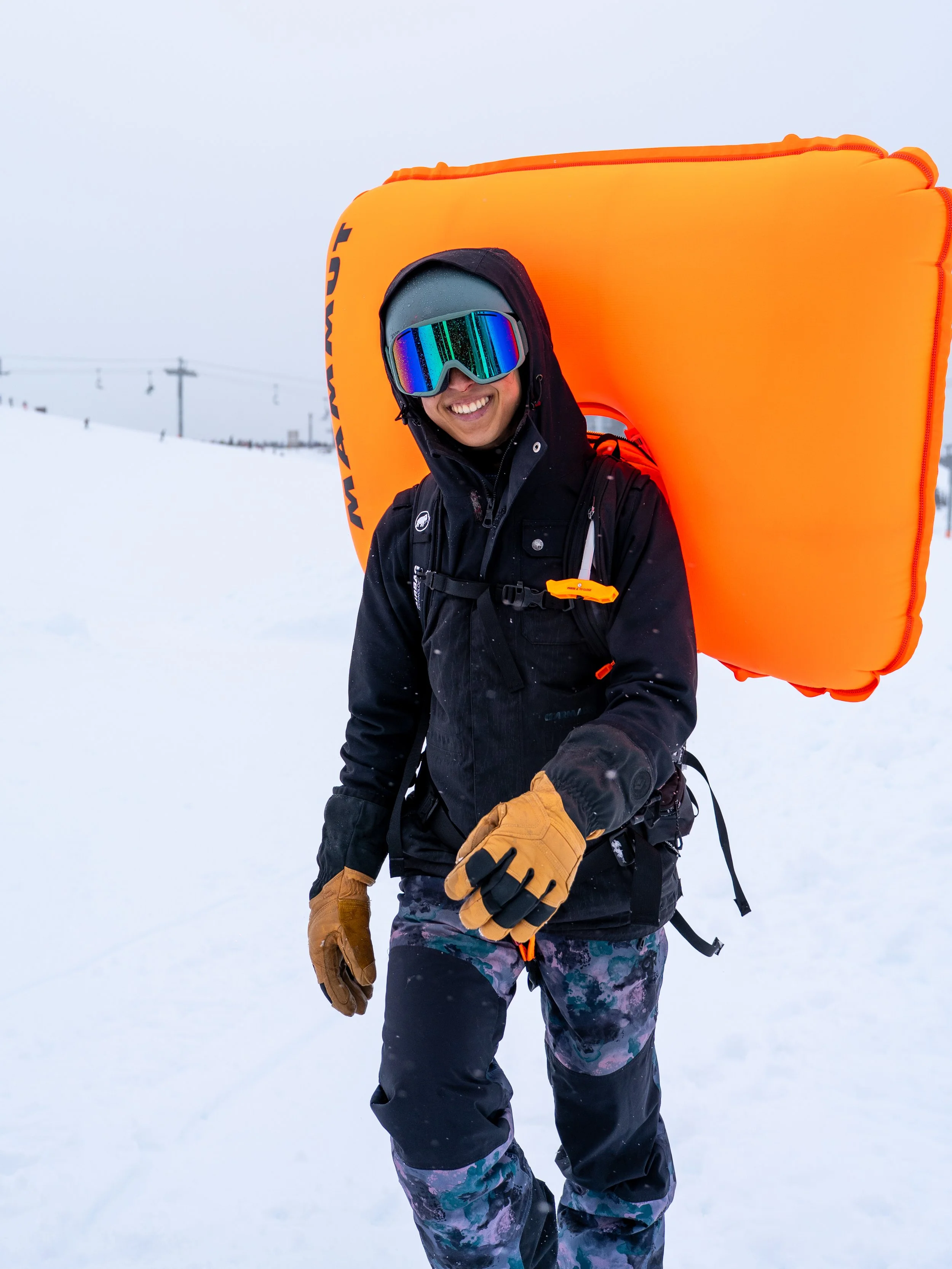
Photo: Alice Guevarra
How did you get into backcountry skiing/splitboarding?
I learned to ski as an adult, in 2021, the same season I got into backcountry skiing. The whole season was spent learning how to move from a pizza to linking turns, as well as navigating backcountry challenges (dense trees, avalanche hazard, challenging snow conditions).
People don't talk about how hard it is to learn as an adult — the point of development where your prefrontal cortex gives you a very natural fear of falling and breaking bones.
My partner has a mountain of patience and is the reason I got into backcountry skiing. He spent many powder days coaching me and helping me up when I inevitably face-planted in deep pow or sent a ski flying. Stoked to say we're on more equal ground now, but he's still there to coach me through some particularly terrifying (steep) terrain.
What do you appreciate most about your mentee and how you work together?
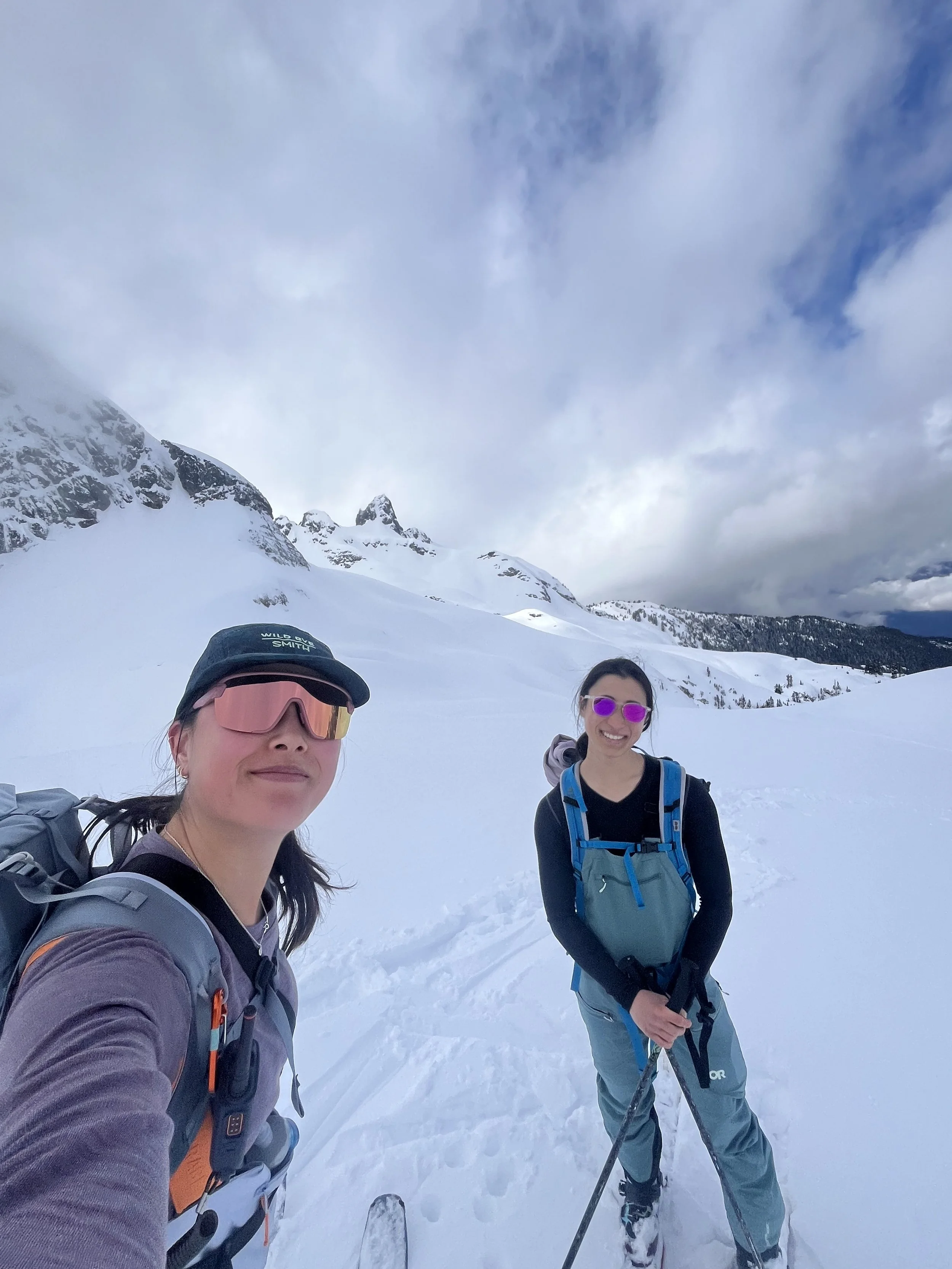
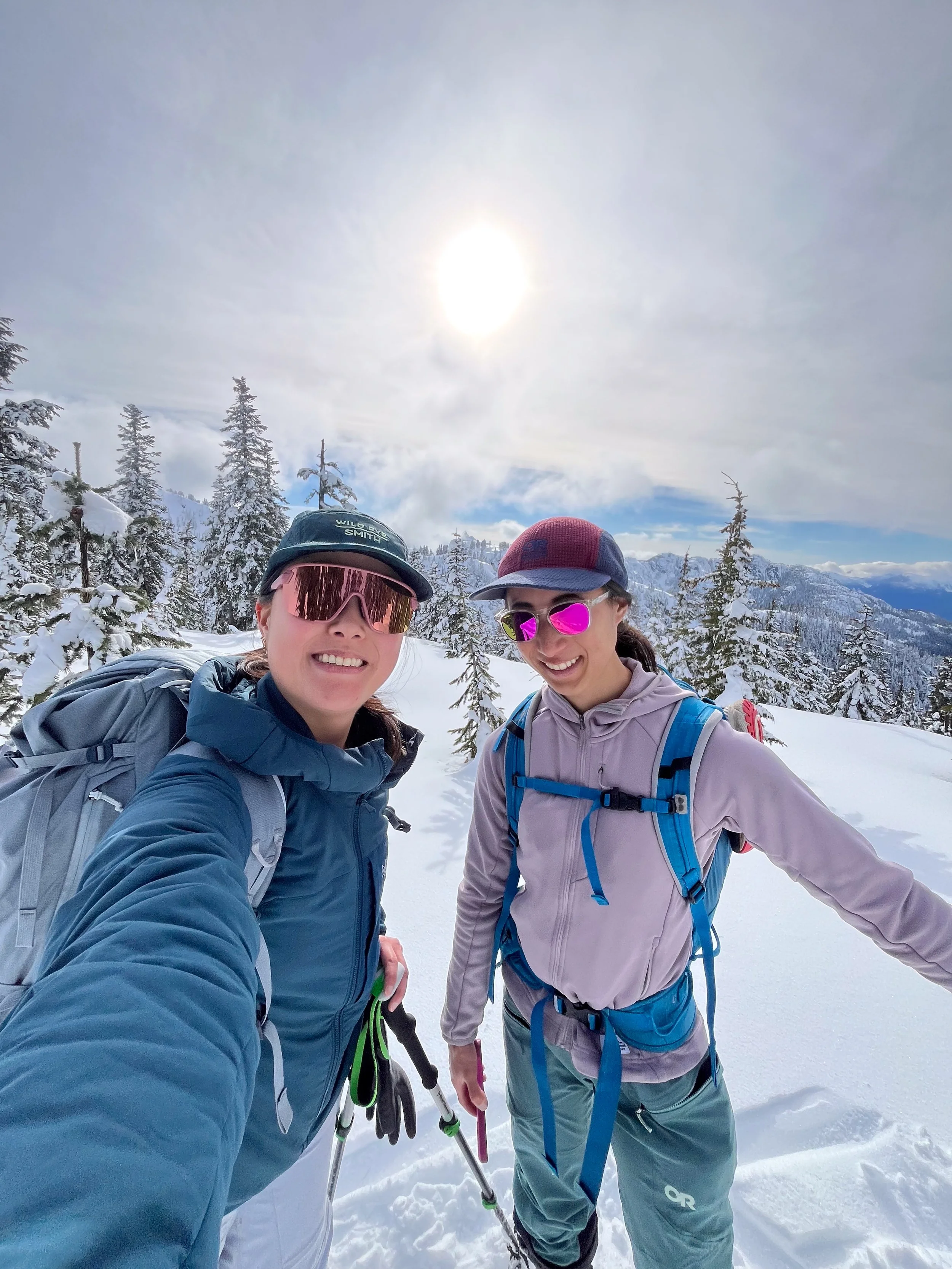
My current mentee and past mentees have been amazing! I feel so lucky to have met incredible people through the program and my time outdoors. My mentee is an amazing skier and I love watching her rip down the runs (I often try to imitate her form for my own learning...).
She's so much fun, open-minded in a variety of different ways, and safety-conscientious which provides a mutually beneficial learning environment for the both of us to thrive in.
She's also taught me some fun ski-/outdoor-oriented terms that I've incorporated into my regular language, including: "looking like a drowned rat", which was said after a particularly wet backcountry outing; and "sucker pow" to mean snow that appears fluffy but sucks you into heavy cement/not fun snow. All in all, I appreciate her company and pleasant persona!
What insights have you learned through being a mentor?
I've never thought of myself as a leader, and quite frankly, I still don't think of myself as a leader. Being a mentor has certainly helped me develop some leadership traits. I find myself more comfortable stepping into a leadership role as opportunity arises — speaking up and contributing my own ideas, and particularly making space/cultivating an environment where others also feel comfortable sharing their own thoughts.
What advice would you give to someone who is considering being a mentor with Mountain Mentors?
Go for it! What I really appreciate about MM is the genuine care and consideration of those involved with the program. A lot of effort goes into each pairing. The board (as well as the cohort) are there to provide additional support, in which ever form you need, whether it be emotional or logistical. If there are concerns that you have, then put it in your application. It helps determine pairing matches!
People generally have a lot to offer, even if they don't feel that they do. It's common for BIPOC (or women) folk to feel imposter syndrome or like they're not "good enough," myself included. I've spent a lot of time feeling lesser than, but at the end of the day there's always something I feel I can offer to someone with less experience.
Taking that leap is totally scary, but the mentorship program is two-way learning. I hope that I've been able to pass on wisdom and valuable teachings to my mentees, but I can guarantee they've all also taught me a lot as well.